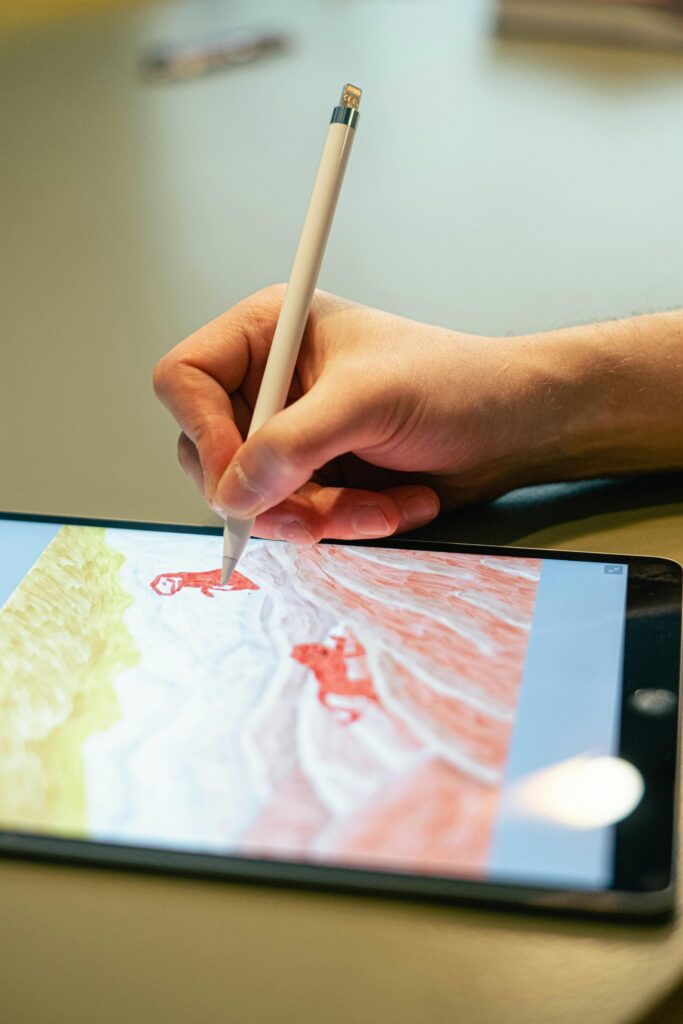
For the past decade, digital brushes have been at the heart of the digital art movement. They gave artists the ability to mimic traditional mediums…watercolor, oils, pencils, inks…while offering the flexibility and speed of working on a screen. Entire marketplaces sprang up around brush sets, with creators producing endless variations to suit every style.
However, there’s been a noticeable shift: artists aren’t buzzing about digital brushes the way they once were.
Why? A few reasons stand out.
1. Brush Overload
At some point, the novelty of brushes turned into oversaturation. With thousands of sets available, artists often feel overwhelmed rather than inspired. Many are discovering that, in practice, they only end up using a handful of favorites. As a result, the “must-have” brush hype may have started to fade.
2. A Return to Simplicity
More and more, artists are gravitating back to basics…one brush, one tool, one style. Instead of collecting endless packs, they’re focusing on refining their skills. For many, mastery of a single versatile brush feels more rewarding than scrolling through hundreds of options.
3. Shifts in Creative Trends
The rise of bold graphic illustration, minimalist design, and AI-generated art has changed the role brushes play. These styles often rely less on textured brush strokes and more on clean shapes, gradients, or automation. The brush no longer holds the same central role it did in painterly or textured styles. And though I am not a huge fan of AI-generated art, I don’t judge…it is what it is.
4. Digital Painting Apps
A lot of artists have noticed that some digital painting apps aren’t upgrading as much as they used to. Apps like Procreate, Krita, and Clip Studio Paint have already packed in many of the most-requested features. Because of that, updates now tend to be smaller refinements rather than big leaps. Unless a brush creator designs their own digital painting app, they can only create within the limits of the current ones.
5. The Handmade Factor
Ironically, as digital art has grown, so has the desire for authenticity. Some artists are pulling away from endless digital tools to return to sketchbooks, paints, and analog textures. This is exactly what I did…shifted to traditional painting. I still do both, but I find traditional painting very therapeutic. Others combine the two…scanning real brush strokes or ink splatters to bring “imperfection” into their digital work.
6. Less Marketplace Support
Digital asset marketplaces aren’t pushing digital brushes as much anymore…at least not as they are other design assets. Most will promote the same (popular) sets repeatedly often overlooking newer ones. This means brush creators are really having to rely almost solely on self-promotion.
As a brush designer myself, I probably shouldn’t admit this but…although digital brushes aren’t disappearing, they’re also no longer the star of the show. Instead of being a trend in themselves, brushes become just another tool…secondary to the vision, skill, and personal touch of the artist. Digital artists are getting more choosier and beginner artists are deciding on sets that have more to offer than just brushes…such as tutorials, templates, etc. (My Art Journaling with Procreate is still my biggest seller.)
On a positive note, this shift may be a good thing for brush creators. It means we can expand our horizons and venture into new and exciting territory. It means there’s no limit as to what we can do.
We just need to be a little creative.
Until next time…